
The Debasement Trade… Explained for Long-Term Investors
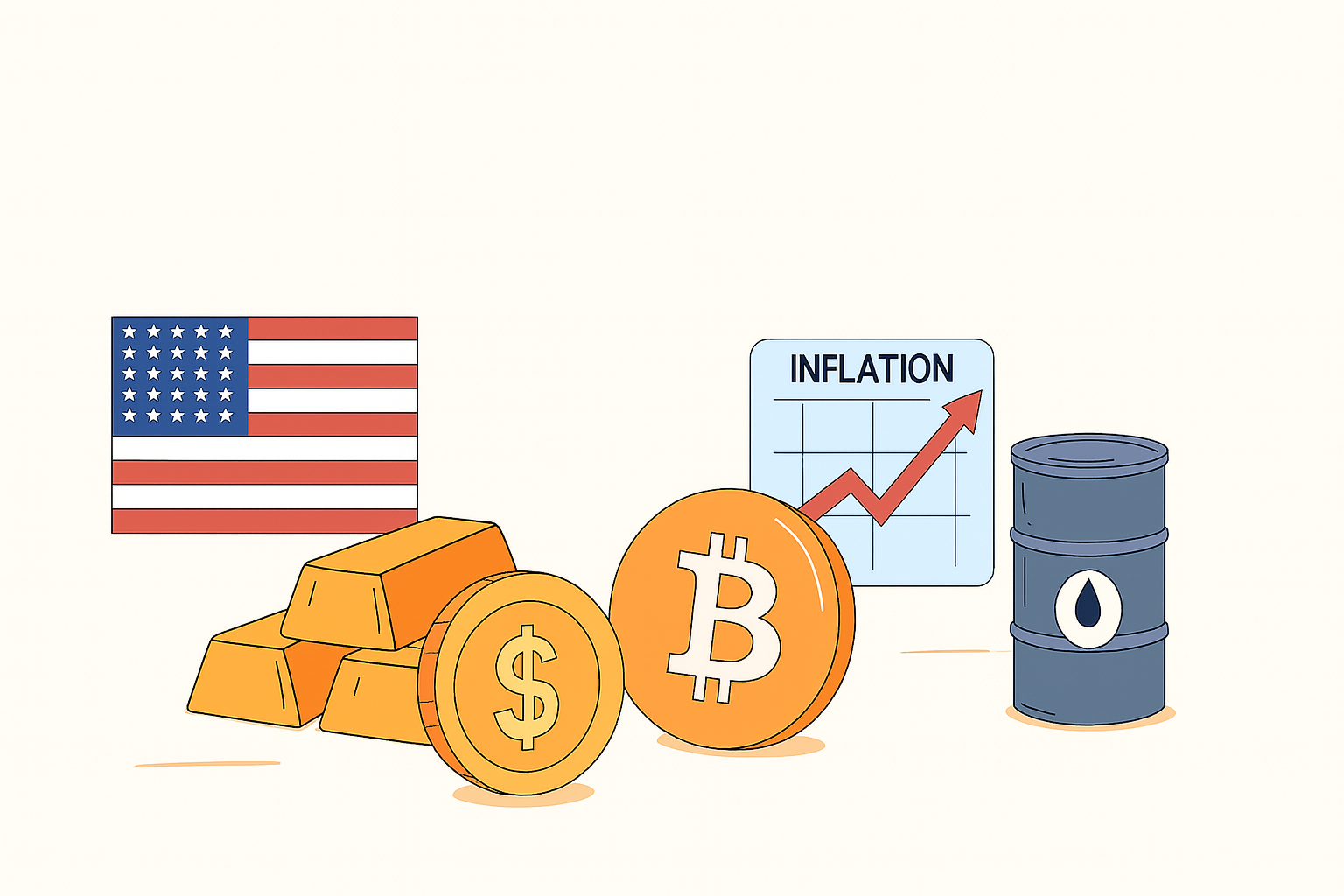
Markets are buzzing with talk of “monetary debasement” — the idea that endless deficits and money creation are quietly eroding the value of paper currencies. It’s not a meme; it’s a centuries-old pattern resurfacing in modern form. But before rushing into gold, crypto, or commodities, it’s worth stepping back to ask: what’s really going on, and how should disciplined investors react?
Below is a balanced look — strengths, weaknesses, opportunities, and threats (SWOT) — behind the “debasement trade.”
What Is the Debasement Trade?
At its core, the debasement trade is an investor reaction to rising government debt and monetary expansion. When fiscal deficits balloon and central banks are pressured to keep interest rates low, investors fear that currencies and bonds will gradually lose real purchasing power.
To protect against that erosion, they shift from nominal assets — such as cash or government debt — into real or scarce assets that can better hold value over time.
This typically includes:
- Precious metals like gold and silver
- Commodities such as oil, copper, and agricultural products
- Digital assets like Bitcoin and Ethereum
- Real estate and equities in sectors with pricing power
In simple terms, the debasement trade is a hedge against policymakers monetizing debt — a bet that the value of “hard assets” will rise relative to money that can be printed.
While the logic is straightforward, the implications are complex: too much fear of debasement can drive speculative bubbles, while too little awareness leaves investors overexposed to inflationary drift. That’s why understanding its mechanics and limits is crucial.
1) Strengths — Why investors find it compelling
- Historical precedent: Empires have weakened their currencies for centuries to ease debt burdens. From Rome’s silver coins to modern QE, money supply expansion is a timeless way to delay fiscal pain.
- Visible imbalance: Global debt has surged past 330% of GDP. Central banks and politicians face incentives to inflate away liabilities rather than impose austerity.
- Alternative assets benefiting: Gold’s breakout above \$4,000 and renewed institutional interest in Bitcoin echo investor demand for scarce stores of value.
- Diversification logic: For multi-asset portfolios, modest exposure to real assets (commodities, TIPS, or gold) can hedge tail risks if fiat currencies lose credibility.
Like any strong thesis, it starts with observable data: large deficits, politicized monetary policy, and capital migrating toward tangible assets.
2) Weaknesses — What makes it fragile
- Narrative risk: “Debasement” can become an umbrella term for every fear, from inflation to politics. Markets often price in apocalypse faster than it arrives.
- Self-defeating behavior: If everyone crowds into the same hedge (gold, Bitcoin), future returns shrink. Momentum trades can unwind fast when liquidity tightens.
- Core currency resilience: The U.S. dollar still anchors trade, debt, and banking systems. Reserve diversification is gradual, not revolutionary.
- Inflation vs. growth ambiguity: Fiscal expansion may debase money in theory, but if it lifts productivity or tax receipts, the impact on real wealth can be neutral or even positive.
The debasement thesis has logic — but it’s not immune to overextension or misinterpretation.
3) Opportunities — Where investors can adapt intelligently
- Portfolio resilience: Re-examining exposure to nominal assets (cash, long bonds) makes sense. Introducing a measured sleeve of inflation-linked or real assets can strengthen long-term durability.
- Global diversification: Currency debasement isn’t uniform. Holding a mix of developed and emerging-market assets reduces dependence on any one government’s fiscal path.
- Innovation hedges: Digital assets, though volatile, are forcing a rethink of what constitutes a “store of value.” Allocations of 1–2% may serve as insurance, not speculation.
- Behavioral discipline: A structured approach — e.g., rebalancing bands or periodic reviews — turns fear into strategy rather than reaction.
Handled correctly, “debasement” becomes a framework for robust portfolio design, not a panic button.
4) Threats — What could go wrong
- Policy reversals: Sustained tightening or fiscal reform could crush the trade, punishing latecomers to gold and crypto.
- Volatility clustering: Assets that benefit from debasement often move together during stress, eroding diversification when it’s needed most.
- Political uncertainty: Currency reform, taxation of digital assets, or capital controls could reshape what “safe haven” even means.
- Behavioral traps: Fear-based allocation shifts — like abandoning equities for hard assets entirely — can lock investors out of long compounding cycles.
Every hedge has a half-life. The real risk isn’t missing the trade; it’s mis-sizing it.
Bottom line
The “debasement trade” is neither hype nor prophecy — it’s a rational response to fiscal excess, but one that demands humility.
Long-term investors should recognize the structural forces behind it while avoiding the temptation to rebuild their entire strategy around one macro fear.
Balance beats panic: a diversified mix of equities, quality bonds, and selective real-asset exposure — managed with rules, not emotion — remains the surest way to outlast any regime shift.